Real Hotel Installations
Actual SmartScheduler screens running in Malaysian hotels.
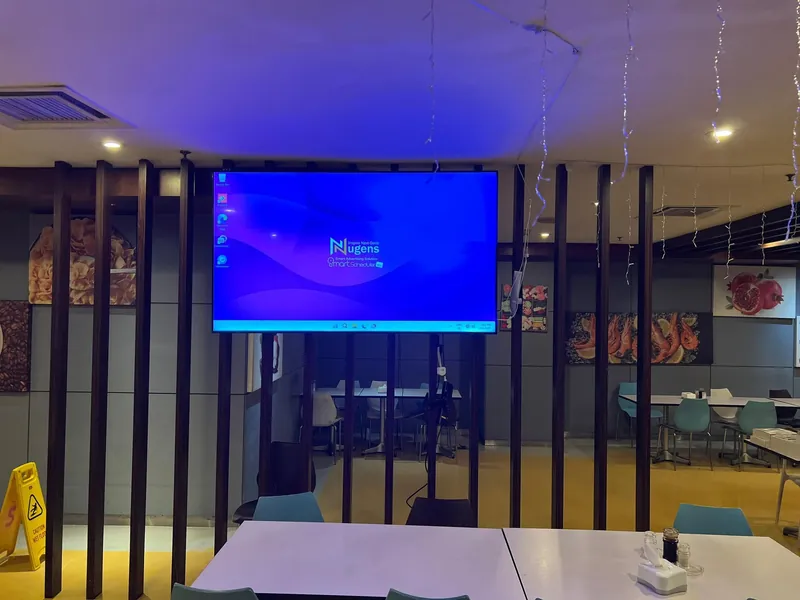
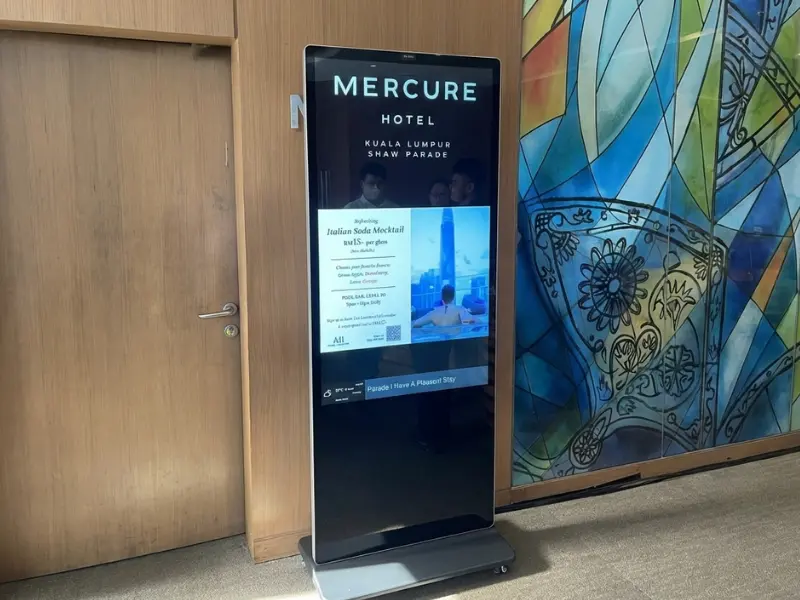
Hotel digital signage for lobbies, event boards, F&B promos and wayfinding. Update from the front desk or from home. Works offline. One-time payment.
Bayaran sekali. Tiada bayaran bulanan. Bermula RM1,499.
Actual SmartScheduler screens running in Malaysian hotels.
Event boards hand-written at 7am. Lobby promotions two months out of date. There is a better way.
Update today's function list from your desk before the morning shift. The lobby screen and ballroom board reflect it within seconds. No trips to each display.
Pool areas, car park levels, basement event halls: content is stored locally on the media player. Screens keep running even with no network connection.
Schedule happy hour promotions to run between 5pm and 8pm and remove themselves automatically. Set up a weekend brunch campaign and it runs without staff action.
Lobby, restaurant, gym, meeting room corridor: every digital signage display managed from one web account with multi-branch remote control. Push different content to each area or send one announcement hotel-wide in seconds.
A 100-room city hotel typically deploys 6–12 digital signage screens. These are the areas where the screen earns its place inside the first quarter, ranked by payback speed.
Replaces the printed daily-event easel that has to be updated by 7am every morning. Lobby screen pulls double duty as wayfinding (Ballroom A this way, Restaurant B that way) and event signage (today's wedding, conference, gala). One screen replaces 20+ printed-foamboard rotations per month. Front-office staff save 15+ minutes per shift on print/swap. Payback is measured in weeks, not months.
A digital board at each ballroom entrance shows that day's event: sponsor logo, host name, schedule, "next session at 14:00." When the corporate client books, the sales team sets up the board template once and you push it live the morning of the event. No more A4 paper signs taped to ballroom doors. For hotels running 50+ events per month, this alone justifies the system.
All-day-dining, lobby lounge, pool bar: each F&B outlet has menus that change with breakfast, lunch, dinner, happy hour. Printed menus get reprinted every time the chef changes a dish or the price moves. Digital menu boards at outlet entrances and inside near the host stand pay back as soon as you skip one round of reprints. Same SmartScheduler instance handles them.
Spa is a high-margin add-on for hotels. A screen near the lift lobby on the spa floor (or near the gym entrance) showing "Today: 50% off afternoon treatments · Walk-in welcome" converts more than a printed brochure on the front desk. Schedule the discount to start at 13:00 and end at 17:00 daily. Remove during peak hours when spa is full anyway.
Often skipped, but high-value. Hotel HR pushes daily notices, training schedules, safety briefs, festival roster updates. Printed memos on a corkboard get ignored. A digital board in the staff canteen runs HR content in rotation and gets read while staff eat. Shangri-La KL runs an internal staff canteen screen on this exact pattern.
Lower payback as standalone, but easy add-on once your central system is running. Pool area screen shows opening hours, weather warnings, towel-pickup info. Gym screen shows class schedule, trainer availability. Business centre shows printer/wifi instructions. None of these justify a screen on their own. But at RM1,499 per TV add-on, they're cheap to bolt on once you've committed.
Standard hotel rollout: Lobby (1 large) + ballroom entrances (2–4) + F&B outlet menus (3–5) + staff canteen (1) = 7–11 screens. Multi-area control is included in the RM3,999/screen Central Control package. Talk to us for hotel-specific pricing. Multi-screen deployments get bundle discounts.
Patterns we see from properties 3+ months into running digital signage. Avoid these and the system delivers the operational savings you bought it for.
If only the marketing manager has dashboard access, every event change requires a hand-off, and on weekends or PHs, things go stale. Give Front Office Manager and Banquet Coordinator their own logins. SmartScheduler doesn't charge per user, so there's no reason to bottleneck.
A wedding sponsor logo lingering on the lobby screen 12 hours after the event ends looks tired. Always set an end-time on event-specific content when you publish, not "manually remove later." 95% of "manually remove later" jobs get forgotten until the next event coordinator notices.
A 4-star hotel running stock-photo "luxurious dining experience" slides next to its actual restaurant photos undermines its own positioning. Spend a half-day on a phone photo session of your own outlets, ballrooms, and spa. Use those. Guests recognise the spaces; that's the point.
Hotel screens have higher visibility per square inch than your website. A typo in "Grand Ballrom" sees more eyeballs than your home page header. Set up a 2-person review (creator + checker) before any guest-facing slide goes live. Printed-mistake remediation costs nothing on digital. But only if you catch them.
If you're a Klang Valley hotel, your guest mix is BM, English, Mandarin, and increasingly Korean and Arabic. Run a 4-language rotation on lobby screens: each language version gets 6–8 seconds. SmartScheduler doesn't care what language the image is in.
The screens earn their keep through ongoing content refreshes. A hotel that updated the screens monthly in year 1 and never touched them in year 2 is wasting hardware. Build it into your weekly marketing sync, 30 minutes every Monday to update event boards and rotate F&B promos.
Want our hotel signage starter pack? WhatsApp us "Hotel checklist" and we'll send a PDF with the area-by-area screen plan, content-rotation cadence, and the central-control role split that Mercure / Shangri-La use.
From boutique hotels to international chains and recreation facilities.
Lobby and event area display screens
5-Star HotelGuest information and F&B promotion displays
International Hotel ChainProperty and community event information boards
Property DevelopmentCourt schedules, promotions, and member information screens
Recreation FacilityOne-time. No monthly fee. No recurring software cost.
Commercial-grade display with a Windows media player built in. Installation is quoted with your order.
Multi-area central control (lobby + restaurant + events + gym) from RM3,999 per screen. Already have screens? The RM1,499 package connects to existing TVs.
Our ballroom is in the basement with almost no WiFi. Will the screens work?
Yes. SmartScheduler stores all content on the Windows media player locally. The screen plays your scheduled content regardless of WiFi. You only need internet when pushing new content from the dashboard, and that can be done from the front desk or the office.
Can we show different content in the lobby versus the restaurant versus the gym?
Yes. Each screen or group of screens can have its own content schedule. The lobby shows today's event list, the restaurant shows the day's specials, the gym shows membership promotions, all managed from one login with no overlap.
How quickly can reception staff update the event board for today?
A trained staff member can upload a new event slide and push it live in under two minutes. Most hotels set up recurring templates for standard event layouts so staff only swap the text or image, even faster.
We have screens already installed. Do we need to replace them?
Usually no. If your existing screens have an HDMI input, the RM1,499 package plugs a Windows media player into them and you are running. No new display purchase needed. For lobby or high-footfall areas where a commercial-grade display is worth the upgrade, the RM3,999 package covers the full setup.
Can the duty manager update the lobby screen from a phone?
On SmartScheduler, updates happen at the PC driving the screen, which is why the lobby board keeps playing through a network outage. If updating from a phone matters more than that, a cloud platform suits it better. Layar is a Malaysian one, from RM19 a month, with a free plan to try first.
SmartScheduler powers screens across every industry in Malaysia.